
Gnawa Music: The Soul of Marrakech


A sound you recognise before you understand it
If you've ever crossed Jemaa el-Fna in the late afternoon, you've heard it: a deep, hypnotic rhythm, punctuated by the metallic clatter of large iron castanets. That sound belongs to the Gnawa. It's as much a part of Marrakech's identity as the souks or the minarets.

Who are the Gnawa?
The Gnawa are the descendants of sub-Saharan African populations who arrived in Morocco centuries ago, most often in conditions of servitude. They founded spiritual brotherhoods that blended African traditions, Sufi Islam and Berber rites. Their music isn't folklore: it's first and foremost a ritual of healing and spirituality. In 2019, UNESCO added Gnawa to its list of the Intangible Cultural Heritage of Humanity.
The instruments and the sound
- The guembri (or sintir), a three-stringed lute with a skin-covered body. It provides the deep bass line that carries the whole piece.
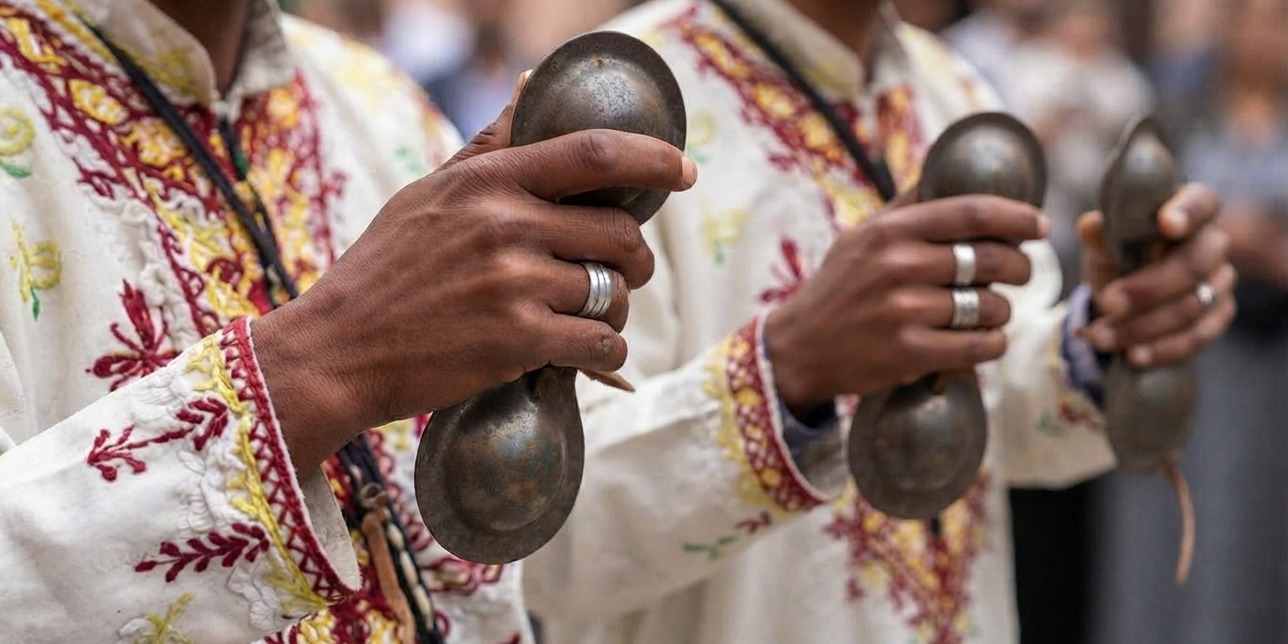
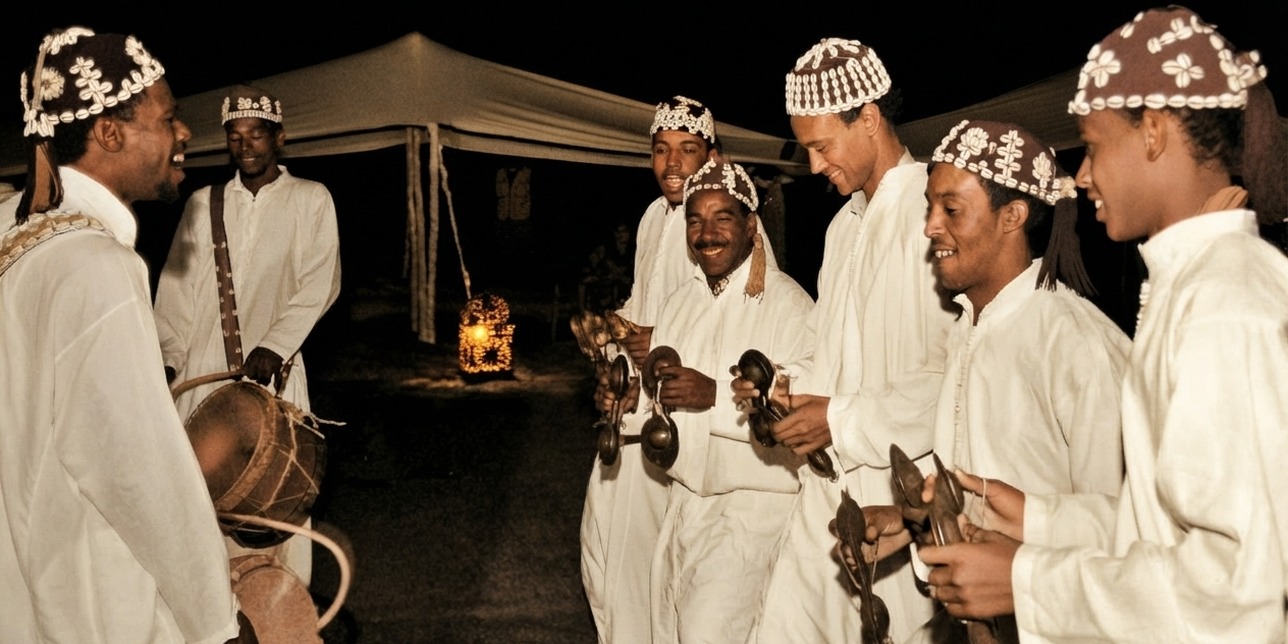
- The qraqeb, iron castanets that keep the rhythm.
- The voices, in call and response: the maâlem (the master) sings, the chorus answers, and the pattern repeats and builds.
It's this repetition that creates the trance.
How to spot them
On the square or on stage, Gnawa musicians are easy to recognise. They wear colourful tunics and a cap topped with a large tassel. As they play the qraqeb, they spin their heads so the tassel whirls in circles, in perfect time with the music. It's both spectacular and part of the show. In a traditional ceremony the dress is more restrained, but this look has become the unmistakable image of the Gnawa for travellers.
The lila: a night-long ceremony
Traditionally, Gnawa music is played during the lila, a ceremony that lasts all night. It follows a precise order, with colours, incense and dances linked to the different spirits being invoked, with the aim of soothing and healing. Today most visitors discover the Gnawa in a concert or show setting, but the structure and intention remain those of the tradition.
Gnawa today: from tradition to the world stage
The Gnaoua and World Music Festival in Essaouira, created in the late 1990s, introduced this music far beyond Morocco. Maâlems have played with jazz, rock and world-music artists. Gnawa has kept its roots while becoming a musical language that many artists draw on.
Where to hear Gnawa in Marrakech
- Jemaa el-Fna: groups play in the late afternoon. It's lively and spontaneous, but keep in mind the musicians expect a small tip if you take photos.
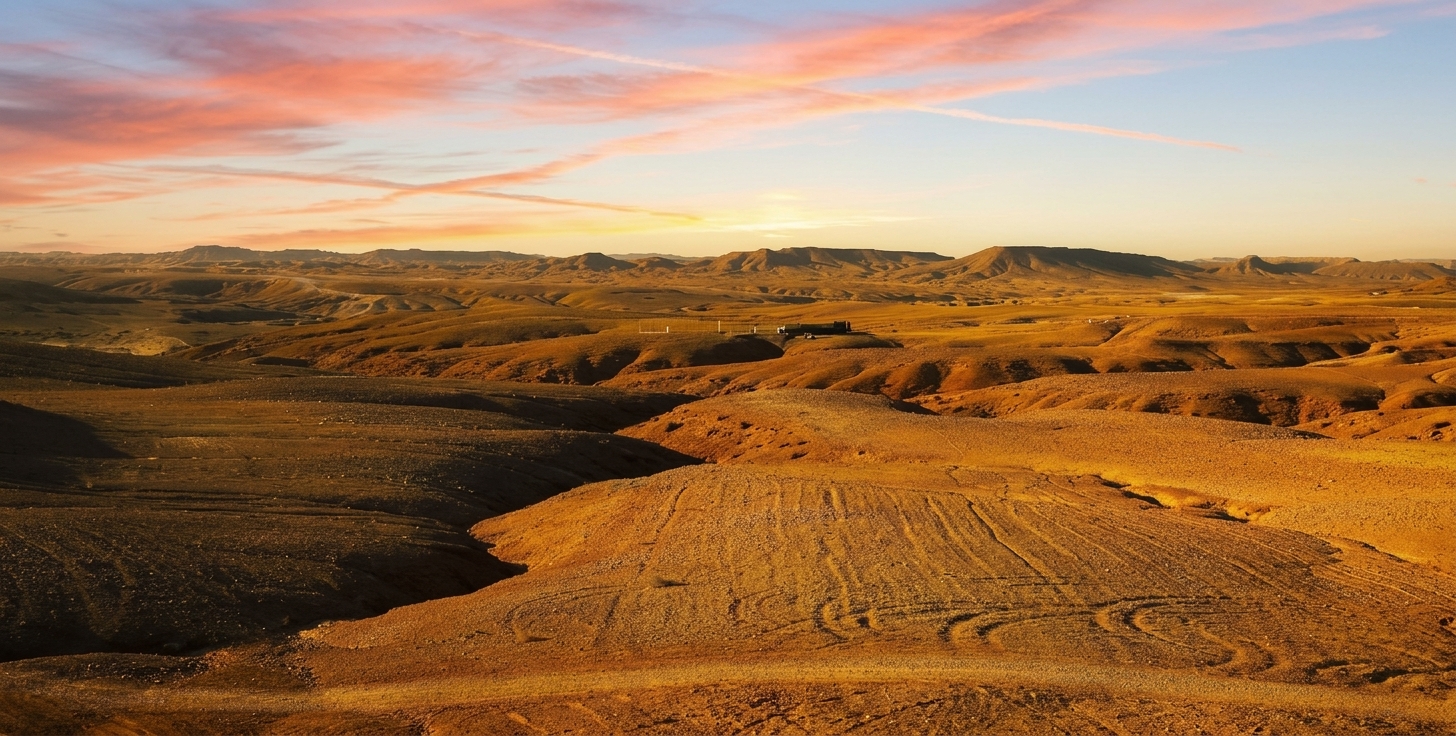
- Dinner shows in the Agafay Desert: this is where you can experience Gnawa music at its best, after dark, around a fire, with a real group of musicians. At La Bohème and Le Bédouin, the Gnawa are at the heart of the evening, alongside dancers and fire performers.
- Concerts and festivals: if your stay falls at the right time, check what's on in Marrakech and Essaouira.
Tips to make the most of it
- Take a few minutes to listen without filming: this music works through duration.
- Keep some small change to thank street musicians.
- For a more immersive experience, choose a setting where the music is the centrepiece rather than background sound.
Experience Gnawa with YallaKech
To hear this music in its finest setting, our dinner shows in Agafay combine desert, campfire and Gnawa musicians. We can also build them into a tailor-made stay for your group.
Related Blogs