
Marrakech's 10 Must-Sees


Marrakech can't be discovered in a single visit, but some places are truly worth the detour. Palaces, gardens, madrasas, lively squares: these are the ten must-sees we recommend to all our travelers. We've grouped them by district, so you can link them together without rushing from one end of the city to the other.
Our route at a glance
To get your bearings, here is how our selection is organized. The ten places are numbered in the order we suggest visiting them, district by district, to keep travel time to a minimum.

Before you go: our tips for a smooth visit
A few simple habits will save you time and spare you plenty of disappointment.
- Buy your tickets on the official websites. It's the best way to avoid queues, middlemen and inflated prices. Opening hours, fares and closing days change regularly: always check them before your visit.
- Book your slot in advance. Some places, like the Majorelle Garden, are often fully booked in high season, and the best slots go first.
- Go for the first slot of the morning. That's when you'll enjoy the places with the fewest people, and in the best light.
- Planning a photo shoot? Check first. In some places, like Le Jardin Secret, a professional photo session requires an extra fee or a permit.
In the heart of the medina
1. Jemaa el-Fna Square (◷ 30-45 min · ✓ Free entry)
Jemaa el-Fna Square is the beating heart of Marrakech, and one of the few places where the show never stops. During the day you'll meet juice sellers, storytellers, musicians and gnawa performers. From late afternoon everything changes: the food stalls set up, the smoke rises and the square fills up until late at night. It is also listed as UNESCO Intangible Cultural Heritage.
Good to know: come in the late afternoon to watch the square change as the sun sets. Keep your belongings close, and if you photograph a performer, a small tip is customary. We do recommend not photographing the animals (monkeys, snakes) and not taking part in that business: their living conditions are not monitored, and every paid photo keeps the trade going.
2. The souks (◷ 2 h · ✓ Free entry)
North of Jemaa el-Fna Square, the souks form a huge maze of alleys where each trade has its own corner: leather, spices, babouches, metal lanterns, rugs, jewelry. You'll get lost, and that's exactly the pleasure of the stroll. Every alley holds a surprise, and you can still watch some artisans at work before your eyes, even though there are fewer and fewer of them: many workshops have moved outside the medina.
Good to know: mornings are calmer and cooler. Haggling is part of the game: stay smiling, and a polite “no thank you” is enough. You'll often find the same items in several shops, so you can compare prices and quality before buying. Download an offline map or use Jemaa el-Fna Square as a reference point: getting lost is part of the experience, so you might as well know how to get out!
3. The Koutoubia (◷ 20-30 min · ✓ Free entry)
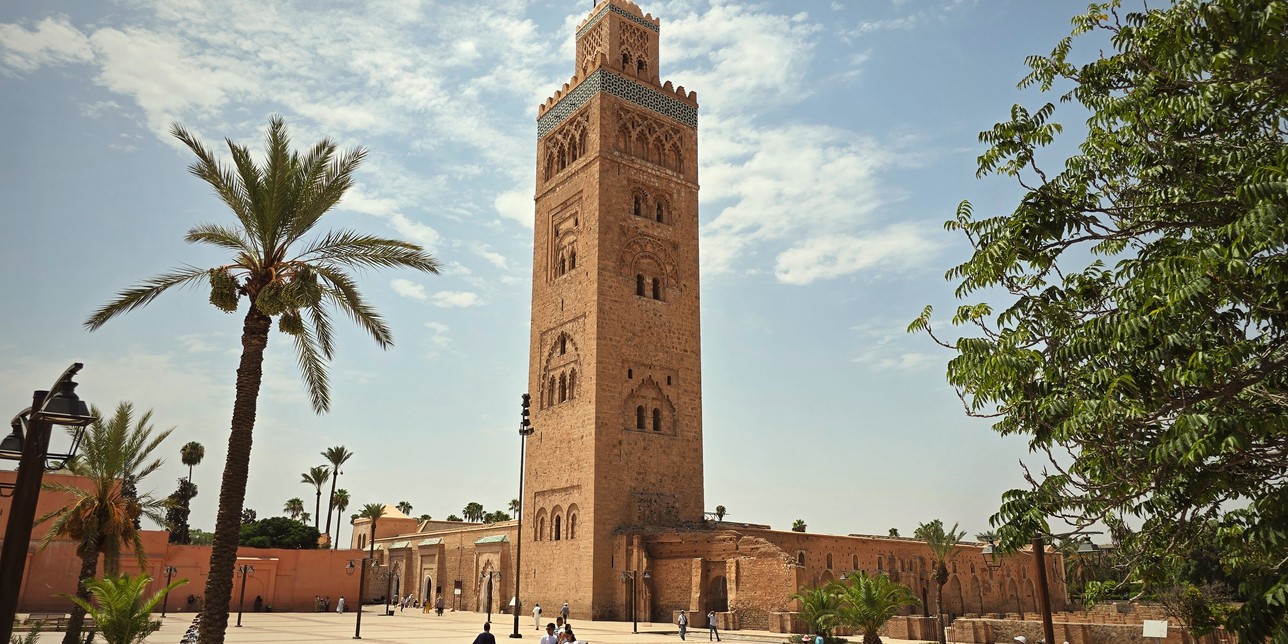
The Koutoubia is the symbol of Marrakech. Built in the 12th century, its mosque is topped by a minaret about 77 meters tall, visible from many places in the city. Its name is said to come from the booksellers who once kept their stalls at its foot. People come mostly to admire it from the outside and to stroll through the gardens around it.
Good to know: the mosque isn't open to non-Muslims, but you can enjoy it very well from the outside and the gardens. The late-afternoon light is the best for photos. It's a few minutes' walk from Jemaa el-Fna Square, so you can easily combine the two.

South of the medina: the palace district
4. El Badi Palace (◷ 1 h · € Entrance fee)
Commissioned in 1578 by the Saadian sultan Ahmed al-Mansour, El Badi Palace was designed to impress ambassadors from around the world. It was later largely dismantled so its materials could be reused in Meknes, and today only huge red walls and large open-air courtyards remain, with pools and orange trees. That is what gives it its charm. Storks are often seen nesting along the top of the ramparts.
Good to know: climb up onto the ramparts, where the view over the medina and the rooftops is superb.
5. The Saadian Tombs (◷ 45 min · € Entrance fee)
Right next to the Kasbah Mosque, the Saadian Tombs hold the burial places of the dynasty that ruled Morocco in the 16th century. After the dynasty fell, they were walled up, then rediscovered in 1917. The most famous room is the Hall of the Twelve Columns, with its Italian marble columns and carved, gilded cedar ceilings. The neighboring garden holds many more tombs, in a very peaceful setting.
Good to know: the site is small and the main hall fills up quickly: this is one of the visits where the first slot of the morning really makes a difference. El Badi Palace is very close, so you can easily combine the two on foot.
6. Bahia Palace (◷ 1 h · € Entrance fee)
Bahia Palace was built in the 19th century by Si Moussa, the sultan's grand vizier, then enlarged by his son Ba Ahmed. Its name means “the brilliant one,” and it lives up to it: more than 150 rooms are arranged around patios, gardens and a large marble-paved courtyard, with zellige tiles and painted cedar ceilings. Unlike El Badi, it has remained intact, which gives a very precise idea of how the great families of the time lived.
Good to know: remember to look up, the ceilings are among the most beautiful things to see. Only part of the palace can be visited. The first slot of the morning is the quietest, and it's a few minutes' walk from El Badi Palace.
North of the medina
7. Ben Youssef Madrasa (◷ 45 min · € Entrance fee)
Founded in the 16th century by the Saadian sultan Abdallah al-Ghalib, the Ben Youssef Madrasa was the largest Quranic school in the Maghreb and could house several hundred students. It closed in 1960, then was restored and opened to visitors. At its center, an open-air courtyard with a pool is surrounded by carved cedar, stucco and zellige of incredible finesse. Around it, the small cells where the students slept can also be visited.
Good to know: go upstairs to see the cells and enjoy a view over the courtyard. It's a few minutes' walk from the north of the souks, so you can easily fit it into your stroll.
8. Le Jardin Secret (◷ 45 min · € Entrance fee)
Hidden behind high walls in the heart of the Mouassine district, Le Jardin Secret is an oasis of calm a few steps from the bustle of the souks. Its origins date back to the 16th century, to the Saadian era. After a long restoration, it opened to the public with two large gardens built around the presence of water. You can also climb the tower, where the view stretches over the rooftops of Marrakech and, in clear weather, to the Atlas Mountains.
Good to know: keep some time for the tower, it's one of the best viewpoints over the medina. It's also the perfect place to take a break from exploring the souks.


Guéliz and the gardens
9. The Majorelle Garden and the YSL Museum (◷ 2 h · € Entrance fee)
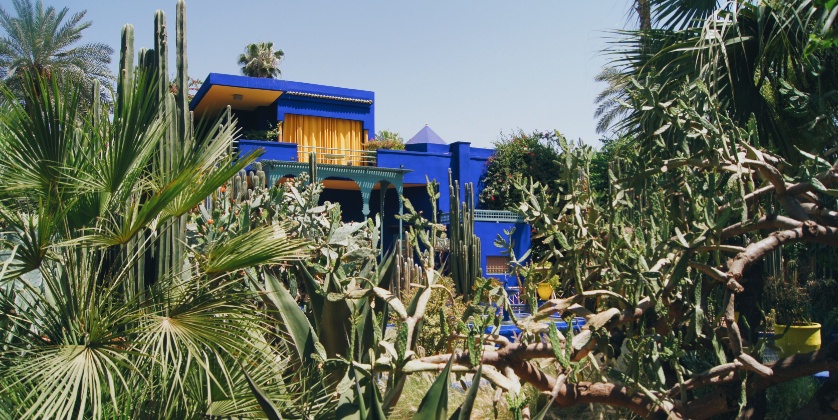
Created by the French painter Jacques Majorelle, the Majorelle Garden is famous for its intense blue, which bears his name, and for its collection of cacti and plants from around the world. In 1980, Yves Saint Laurent and Pierre Bergé bought it to save it from destruction, and they looked after it for decades. In the painter's former studio, the Berber Museum displays superb examples of Moroccan craftsmanship. A few minutes' walk away, the Yves Saint Laurent Museum traces the designer's work; he came here to find inspiration.
Good to know: the garden and the YSL Museum are two separate venues, a few minutes' walk from each other: check the ticket details before you come, and book both slots back to back to combine them.
10. The Ménara Gardens (◷ 1 h · ✓ Garden free, € pavilion entrance fee)
The Ménara Gardens are a vast olive grove, founded in the Almohad era in the 12th century. At the center, a large basin, once used to irrigate the orchards, mirrors a green-roofed pavilion, with the Atlas Mountains as a backdrop on clear days. Locals love to stroll and picnic here, far from the bustle of the medina.
Good to know: the best time is late afternoon, when the light softens over the water. The garden lies outside the medina: plan on taking a taxi to get there.
Not sure where to start? We can help
Ten places is a lot for a single trip, and it's not always easy to know where to begin. Our guided medina tour is a private visit: only your group is accompanied by the guide, and the route adapts to your wishes and your pace, for example more historical or more focused on what interests you. Tell us how long you're staying and what you enjoy: we'll help you build an itinerary that suits you.
Related Blogs